
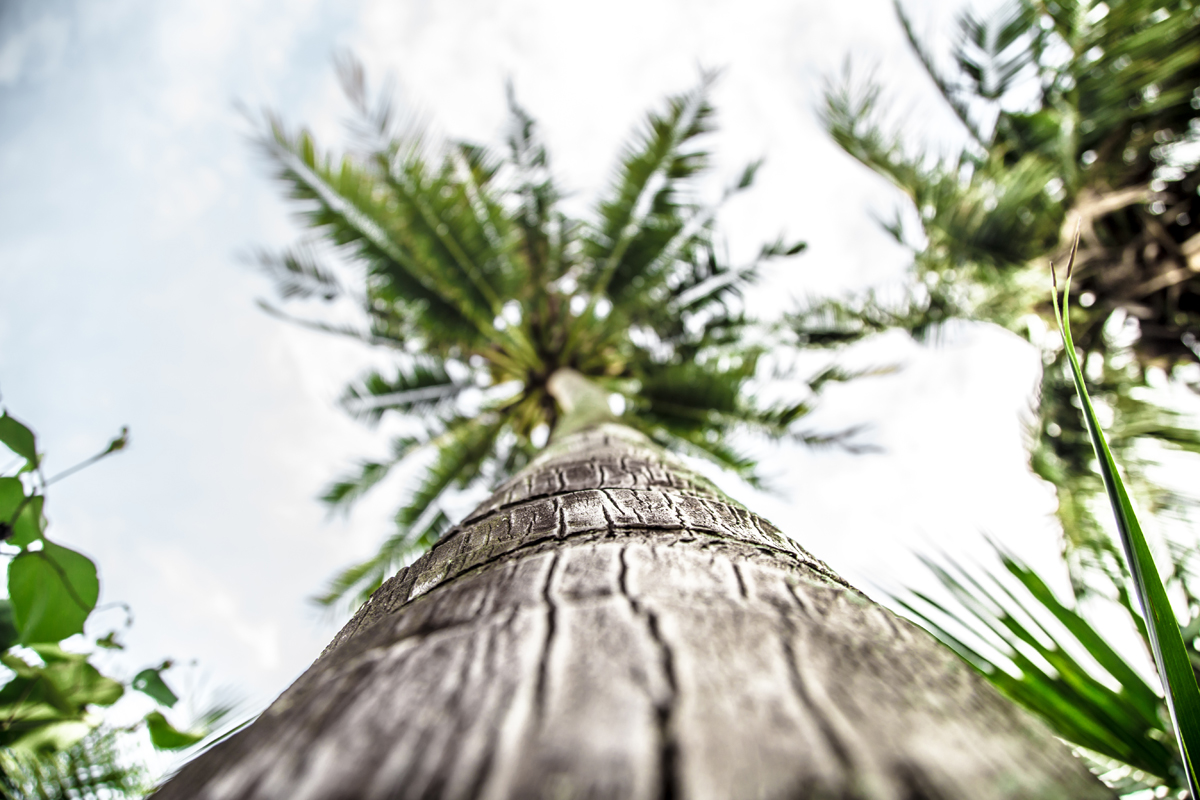
If you’d like to trim your palm tree trunks as your next DIY task, follow the guide below!
When Should You Trim A Palm Tree Trunk?
The tree care professionals suggest trimming palm tree trunks only in the spring. However, keep an eye out for some signs indicating the trunk should be trimmed sooner rather than later.
Some signs may include the presence of dead or broken fronds. The sudden appearance of fruit stalks and palm flowers also suggests it’s time for a trim.
Necessary tools and equipment for this task:
- Gloves.
- Goggles.
- Disinfectants.
- Bench grinder, oilstone, or whetstone.
- Hand saw.
- Chain saw.
- Shears or big clippers.
- Serrated knife.
- Ladder, step stools, or lifts.
How To Trim Palm Tree Trunk
Use this step-by-step guide below to trim your tree trunk both properly and safely.
Step 1. Assess The Trunk’s Condition
- Use either a serrated knife or pruning knife to take care of any small bases or loose bark.
- Thicker frond bases call for the help of a hand saw or pruning saw.
- Begin by checking the trunk for any dead frond bases.
- Look for any insects, mold, or loose bark, as well.
- Try to identify areas where old fronds are attached or where there has been debris buildup.
Step 2. Remove Any Dead Frond Bases
- Begin this task from the bottom, working your way up.
- Carefully cut away dead bases that are no longer securely attached.
- NEVER cut into the trunk’s living tissue.
- This can ultimately create wounds that often invite pests and diseases.
Step 3. Peel Loose Bark Off
- Pry off any loose, hanging bark pieces with either your hand or a knife.
- This helps clean up the trunk’s appearance.
- Try not to peel too aggressively as this could damage the living tissue underneath.
Step 4. Trim Areas With Mold Or Pest Presence
- Carefully trim any sections featuring pests or mold.
- It’s wise to treat the trunk with a pesticide or fungicide to prevent future issues.
Step 5. Shape The Trunk
- Trimming the bases will create a smoother appearance along the trunk.
- Always do this step carefully to prevent trunk damage.
Step 6. Inspection And Cleanup
- Inspect the trunk at a distance.
- Ensure all dead material is removed.
- Make additional cuts to improve the trunk’s appearance, if needed.
- Clear all debris from around the tree’s base.
Do Palm Tree Trunks Grow Back?
If you’re planning to cut your Palm tree at the trunk level, it will NOT grow back. The only way that Palm tree growth can occur is at this base level called the growing tip, or sometimes even called the crown shaft, which is sitting at the base of the trunk and severing this part of the trunk entirely kills the plant.
On the other hand when it comes to multi-stemmed palms, also called clustering palms, this plant growth will continue even if the trunk Is entirely severed! It can and even will rejuvenate new stems from the roots to replace the removed one. In all, be weary of the stalks or trunks you are removing as when you cut them, they might just never come back.
Palm Tree Assessment in Phoenix, Tempe, & More
If you think your palm trees are in need of care Arbor Care can help! We can assist you in getting down to your palm trees health and can provide helpful hints to keep your palm trees happy and healthy. Contact Arbor Care at 480-797-5566 today to schedule your palm tree assessment.