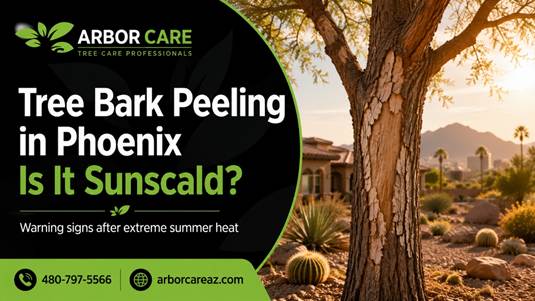
Peeling or cracked bark can make an otherwise healthy Phoenix tree look seriously damaged. By August, intense sun, reflected heat and dry weather may have injured tissue on the trunk or larger limbs. The cause may be sunscald, but insects, mechanical damage and normal bark shedding can create a similar appearance.
A professional assessment is worthwhile when the affected area is large, spreading or close to the base. Arizona heat damage can also cause leaf drop, branch dieback and reduced growth that may not become fully apparent until later.
What Summer Sunscald Looks Like
Summer sunscald develops when exposed bark becomes hot enough to damage living tissue beneath the surface. It often appears on the south or west side of the trunk, where afternoon sunlight is strongest. Young trees, fruit trees and species with thin bark tend to be more vulnerable.
Early damage may look pale, reddish or brown. Later, the bark can become sunken, split or loose. Exposed wood may dry while new tissue slowly forms around the edge of the wound.
Sunscald is more likely after lower branches have been removed and bark that once grew in shade is suddenly exposed. Light colored walls, windows, pavement and gravel can add reflected heat.
Rule Out Normal Bark Shedding
Some trees naturally lose sections of outer bark as they grow. Sycamore, eucalyptus and certain pines may reveal lighter or differently colored bark beneath the old layer. The pattern is usually spread around the trunk rather than limited to one hot side.
Natural shedding should reveal firm tissue rather than a soft, wet or deeply sunken area. Compare the tree with healthy examples of the same species before assuming every loose piece of bark is damage.
Avoid pulling attached bark away. It may still protect living tissue underneath.
Look for Insects and Other Damage
Small holes, sawdust like material or winding galleries beneath loose bark can point to borers or beetles. These insects often attack trees already weakened by heat, drought or root problems.
Lawn equipment can also injure bark near ground level. String trimmers, mowers, stakes, wire and tight ties may damage tissue as the trunk expands.
If bark loss circles much of the trunk, the tree may have difficulty moving water and nutrients. That deserves prompt attention.
Do Not Seal the Wound
Homeowners sometimes apply pruning paint, tar or household sealant to exposed wood. These products do not restore dead tissue.
Do not cut into the wound to reshape it or remove firm bark. Trees respond by forming new tissue around the damaged area. Unnecessary cutting enlarges the wound.
The better approach is to reduce additional stress while monitoring the tree’s response. University of Arizona guidance warns that many tree sealants trap moisture and may create conditions that encourage decay.
Review Pruning and Irrigation
Heavy summer pruning can expose the trunk and inner branches while removing foliage that provides shade. Broken or dangerous limbs may require attention, but unnecessary canopy removal should wait.
Check soil moisture across the active root area rather than only beside the trunk. Arizona trees generally benefit from deep watering that reaches the root zone, followed by enough time for the soil to regain air. A shallow daily splash may wet the surface without supporting deeper roots.
Keep rock, soil and mulch away from direct contact with the trunk. The root flare should remain visible.
Know When the Tree Needs an Assessment
Arrange an inspection when the damaged area is expanding, bark is falling from several places or the canopy above the wound is declining. Cracks, cavities, mushrooms, insects or fluid at the trunk also warrant attention.
A certified arborist can distinguish heat injury from normal bark characteristics, pests, disease or structural damage. Some trees recover with improved care and protection from further exposure. Others may require pruning, treatment or removal when the trunk has lost too much sound tissue.
Schedule a Tree Assessment With Arbor Care
Arbor Care provides certified arborist estimates, tree health assessments, pruning, safe removal and storm damage service throughout Phoenix, Tempe, Mesa, Chandler, Scottsdale, Glendale, Peoria and surrounding Valley communities. If a tree has peeling bark, cracks or a declining canopy after summer heat, call 480-797-5566 for a free estimate and practical advice before the damage becomes more extensive.
References
University of Arizona Cooperative Extension: Sunscald
University of Arizona Cooperative Extension: Drought and Extreme Heat
University of Arizona Cooperative Extension: Pruning Sealants